What’s Happening in the Vineyard at Veraison
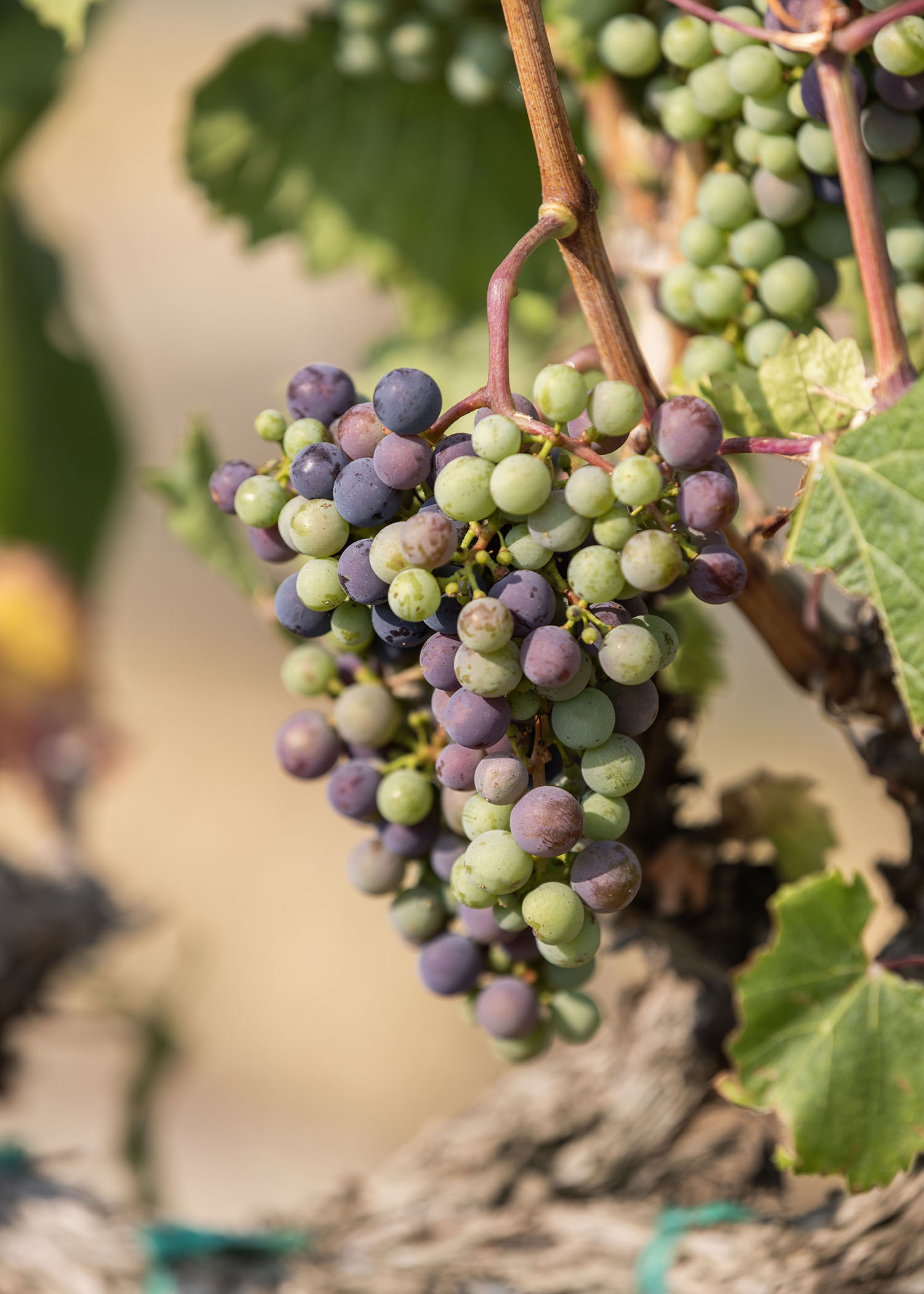
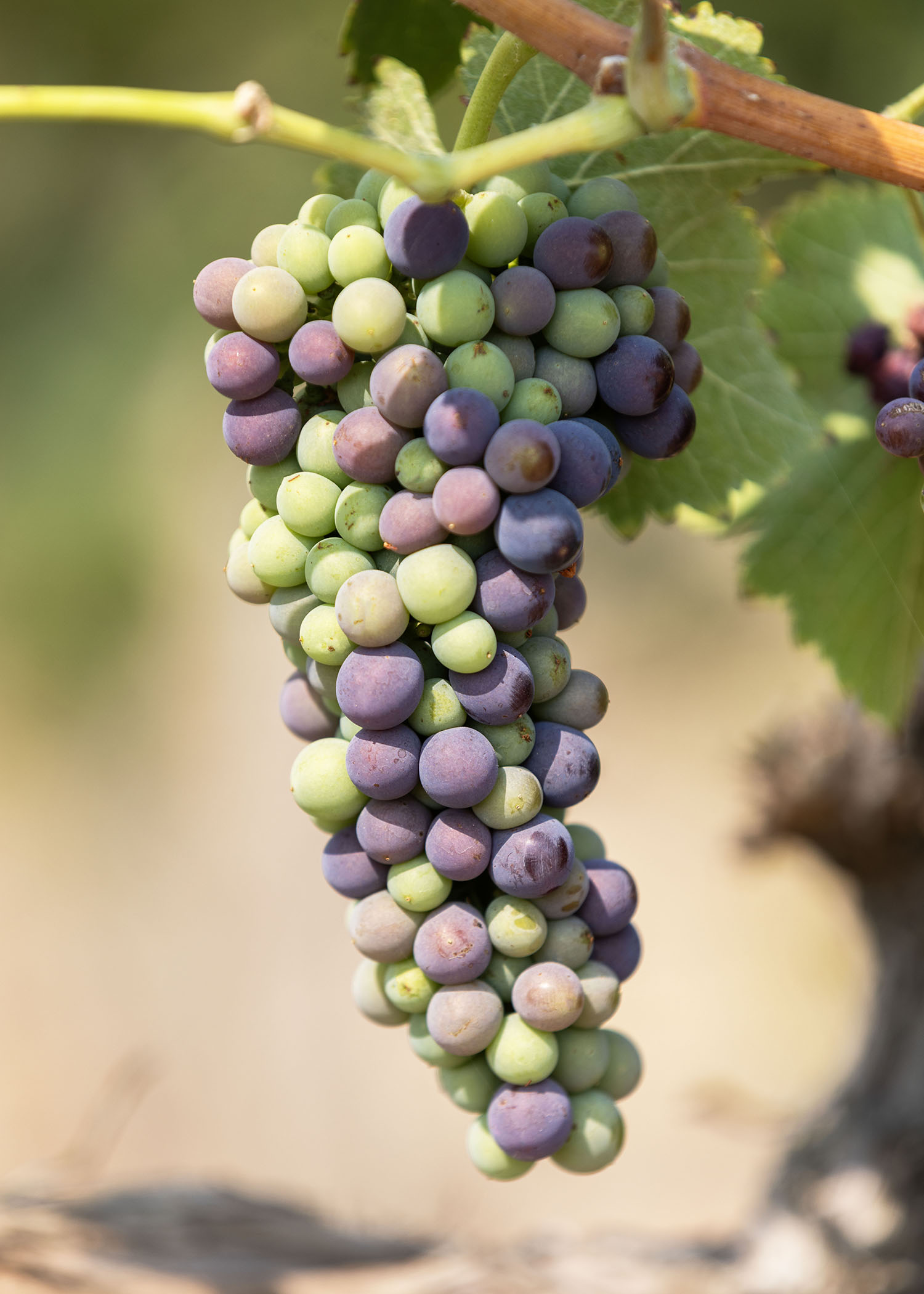
Veraison is one of the most visible stages of the growing season. Red grapes begin changing from green to shades of pink, red and purple, while white grapes soften and become more translucent.
The color gets most of the attention, but veraison marks a much broader change in the berry. Up to this point, grapes are hard, green, high in acid and low in sugar. As ripening begins, they soften, sugar starts accumulating, acidity declines, seeds begin to mature, and the compounds that contribute to aroma and flavor continue developing.
Why does veraison look so uneven?
Veraison rarely happens all at once. One cluster can have green, pink and purple berries sitting next to each other for days.
Individual berries develop at slightly different rates, influenced by things like sunlight, temperature, water status and cluster position. How evenly a vineyard moves through veraison can also give us clues about vine balance and crop load.
The way the berry receives water and sugar changes
Before veraison, much of the water entering the berry moves through the xylem, which carries water and minerals from the roots.
As ripening begins, xylem flow into the berry becomes more limited and the phloem becomes increasingly important. The phloem carries sugars produced by the leaves into the fruit, driving the increase in sugar we see as the grapes ripen.
Flavor development is underway
During this period, grapes also begin developing more of the compounds and aroma precursors that will eventually contribute to their overall flavor profile, building gradually through ripening as the fruit moves toward maturity. These flavors are part of what we’re tracking as we get closer to harvest.
Softer berries also need more protection
Once berries soften, they become more susceptible to sunburn and heat damage.
Canopy management is especially important in eastern Washington, where intense summer sun can damage exposed fruit. We want enough airflow and light around the clusters without leaving them overly exposed during the hottest part of the day.
Color doesn’t tell us when a grape is ripe
A berry can be completely purple and still have tough skins, green seeds or underripe flavors. Sugar may be where we want it before the tannins are, or the fruit may taste great while acidity is still higher than we’d like.
This is why we spend so much time tasting grapes in the vineyard before harvest. We chew the skins and seeds, taste the pulp, and look at texture and flavor alongside lab measurements like sugar and acidity.
Veraison starts to bring harvest into focus
Once veraison begins, we can make better estimates of harvest timing, although weather, variety and vineyard site still have a major influence on how quickly the fruit ripens.
From this point forward, we’re watching sugar, acidity, flavor, skin and seed maturity, vine health and weather much more closely.
It can also be a useful time to evaluate crop load. If a vine is carrying more fruit than it can ripen well, veraison may be slower or less uniform. In some cases, we’ll remove fruit so the vine can concentrate its resources on the remaining clusters.
At the plant level, all of this is being driven by changes in hormones, gene expression and berry chemistry. Abscisic acid increases, auxin activity changes, pigments accumulate in red grapes, cell walls soften, acids are metabolized and sugars build.
For us in the vineyard, veraison is the point when we can start seeing all of that work reflected in the fruit, and when our attention begins shifting pretty firmly toward harvest.